The short answer
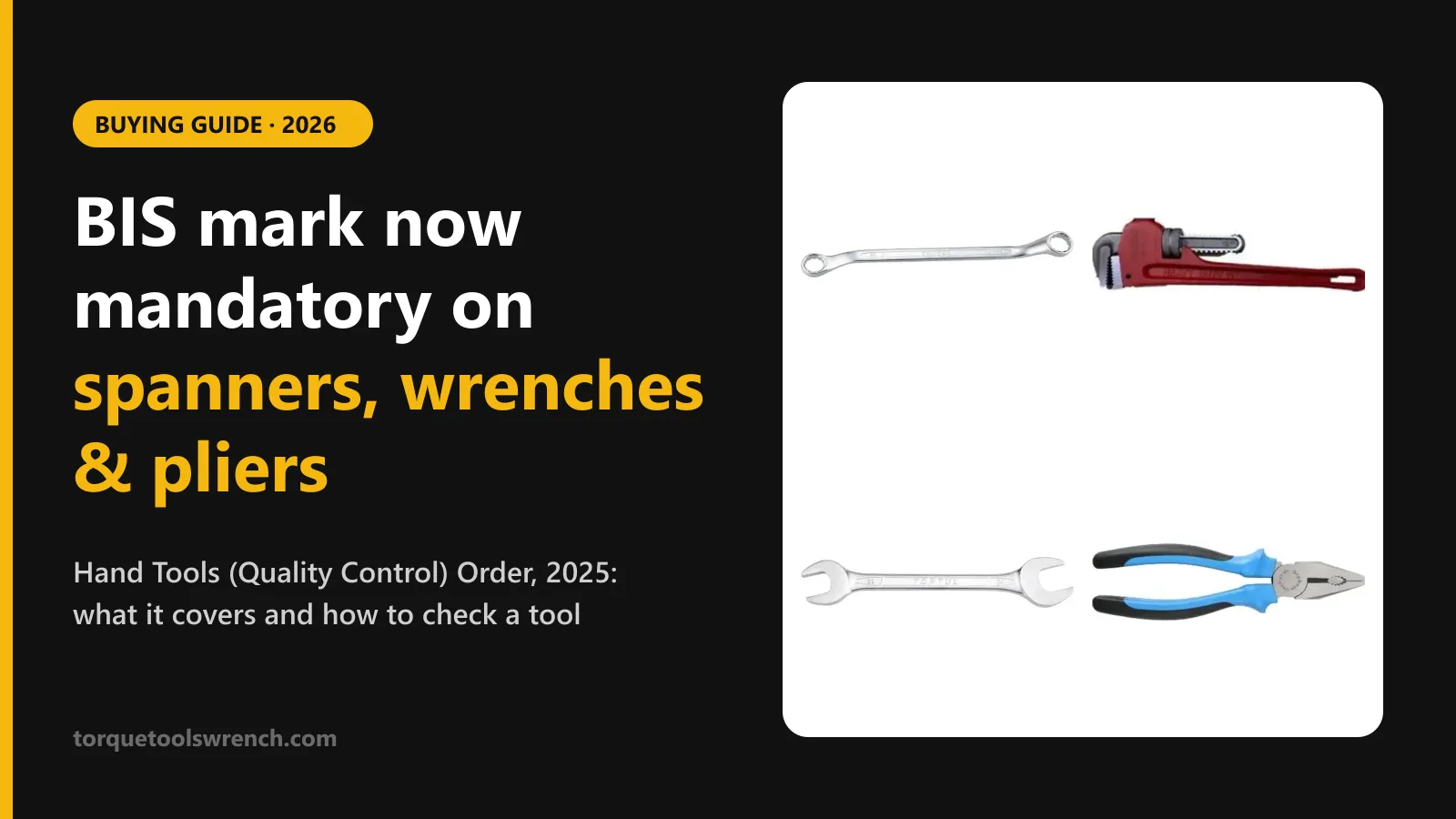
From 1 October 2026, nine hand tools sold in India must carry the BIS Standard Mark: pipe wrenches, chain pipe wrenches, open-jaw, ring, adjustable and slugging spanners, and combination pliers. Small manufacturers have until 1 January 2027 and micro manufacturers until 1 April 2027. Torque wrenches and sockets are not on the list.
From 1 October 2026, nine common types of spanner, wrench and plier must carry the BIS Standard Mark before they can be made, imported or sold in India. The rule comes from the Hand Tools (Quality Control) Order, 2025. This guide explains which tools it covers, the Indian Standard each one must meet, the dates for small and micro manufacturers, and five quick checks you can do before you buy.
What the Hand Tools Quality Control Order is
A Quality Control Order (QCO) makes an Indian Standard compulsory for a product. Once a QCO is in force, the product needs a licence from the Bureau of Indian Standards (BIS) and must carry the Standard Mark (the ISI mark). Selling, storing for sale or importing a covered product without the mark is not allowed.
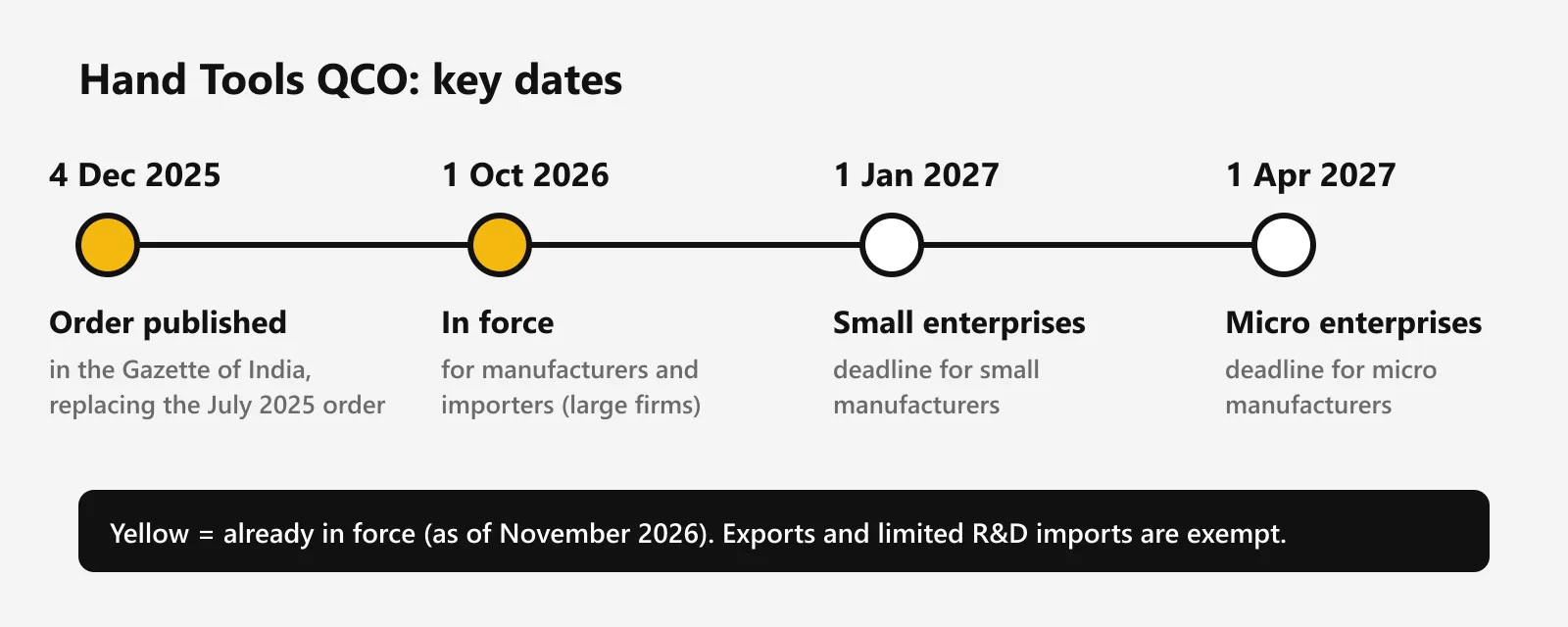
The hand tools order was issued by the Department for Promotion of Industry and Internal Trade (DPIIT) under Section 16 of the BIS Act, 2016. The version in force was published in the Gazette of India on 4 December 2025. It replaced an earlier order from July 2025 and moved the start date to 1 October 2026. Certification runs under Scheme-I of Schedule-II of the BIS (Conformity Assessment) Regulations, 2018, the same product licence scheme used for many other ISI-marked goods.
Key dates
| Who | Must comply from |
|---|---|
| Manufacturers (other than small and micro) and importers | 1 October 2026 |
| Small enterprises | 1 January 2027 |
| Micro enterprises | 1 April 2027 |
The later dates are for small and micro enterprises that manufacture the tools. Importers follow the main date.
Which tools are covered
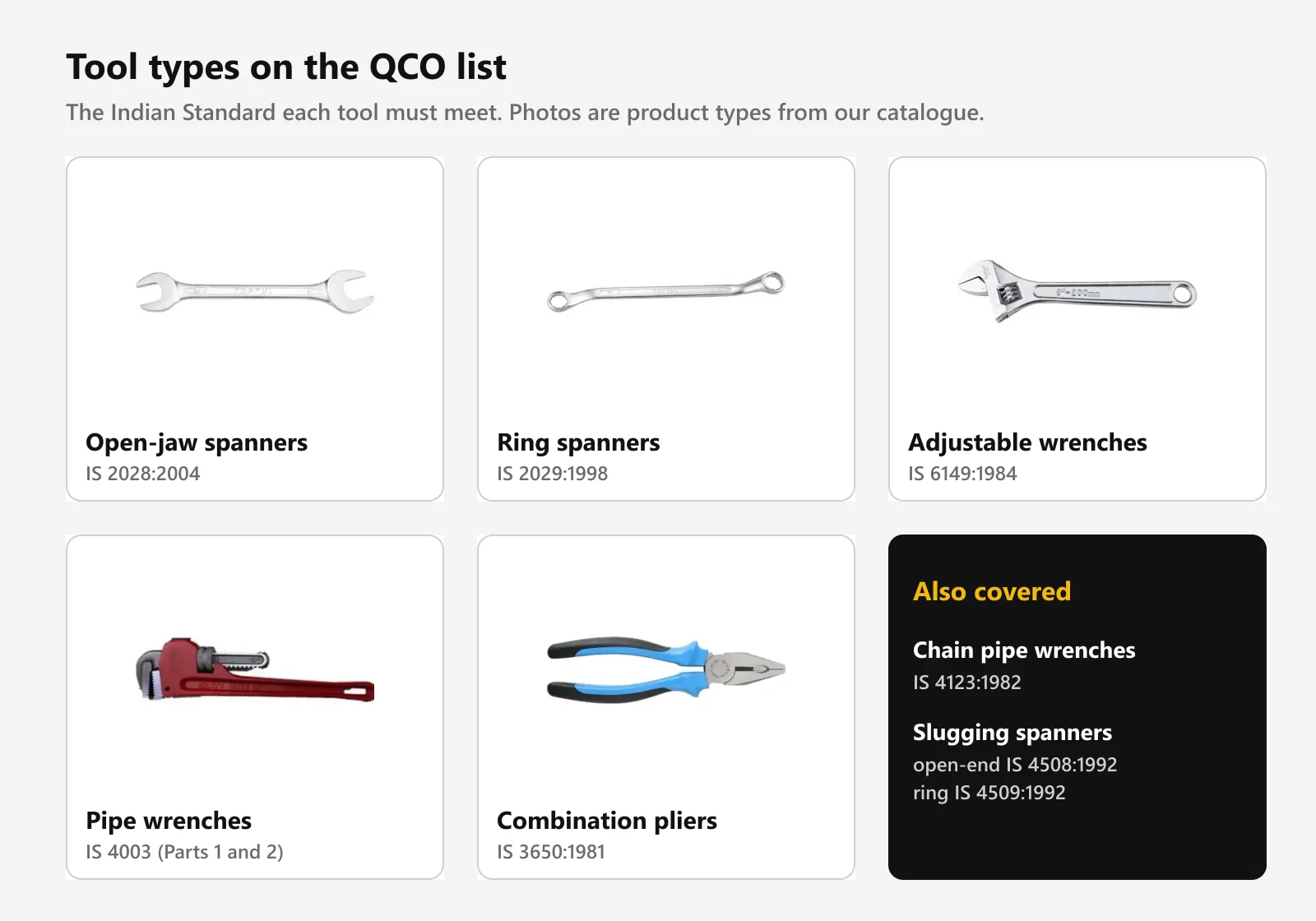
The order lists nine products, each tied to an Indian Standard. The latest version of each standard, including notified amendments, applies.
| Tool | Indian Standard |
|---|---|
| Pipe wrenches, general purpose | IS 4003 (Part 1):1978 |
| Pipe wrenches, heavy duty | IS 4003 (Part 2):1986 |
| Open-jaw wrenches (spanners) | IS 2028:2004 |
| Ring wrenches (spanners) | IS 2029:1998 |
| Single-ended open-jaw adjustable wrenches | IS 6149:1984 |
| Chain pipe wrenches | IS 4123:1982 |
| Open-ended slugging wrenches (spanners) | IS 4508:1992 |
| Ring slugging wrenches (spanners) | IS 4509:1992 |
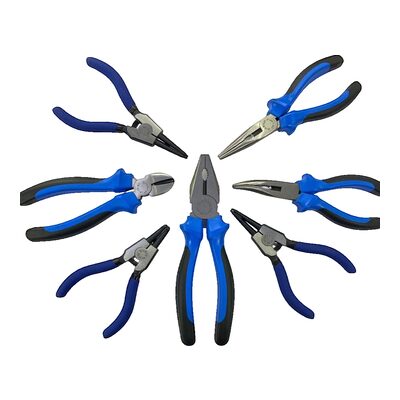
| Combination side cutting pliers | IS 3650:1981 |
In the store, these sit under open end spanners, ring spanners, adjustable spanners, pipe wrenches and combination pliers.
What is not on the list
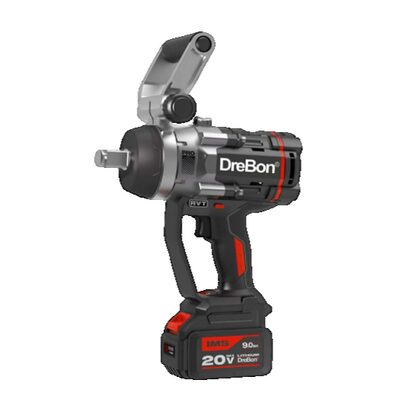
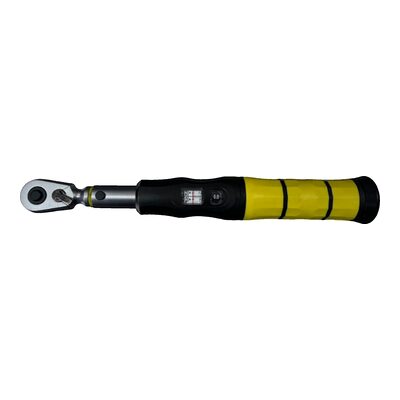
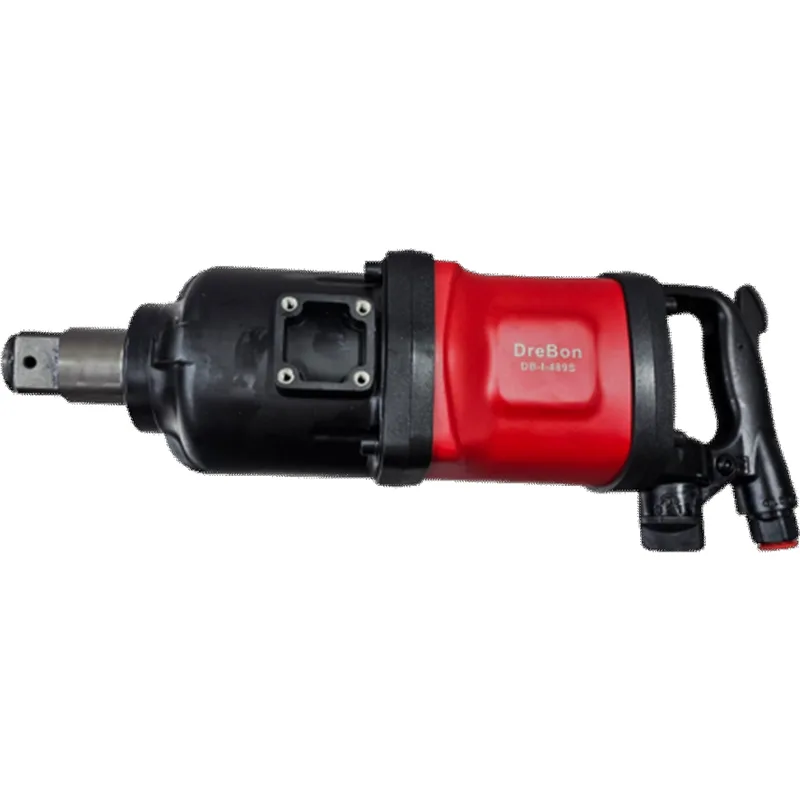
As of November 2026, torque wrenches, sockets and ratchets, screwdrivers, and power tools are not among the nine products. That does not make them unregulated in practice: industrial buyers usually ask for a calibration certificate for torque wrenches, and power tools have their own electrical safety rules. Check the BIS list again before a large purchase, because new QCOs are added from time to time.
Exemptions
- Exports: tools made in India only for export do not need the mark.
- Research and development: a hand tool manufacturer may import up to 200 units a year for R&D. These cannot be sold, must be scrapped after use, and records must be kept for each year.
If you buy for resale, plan your stock around the dates above and ask your supplier how older, unmarked stock is being handled.
How to check a tool before you buy
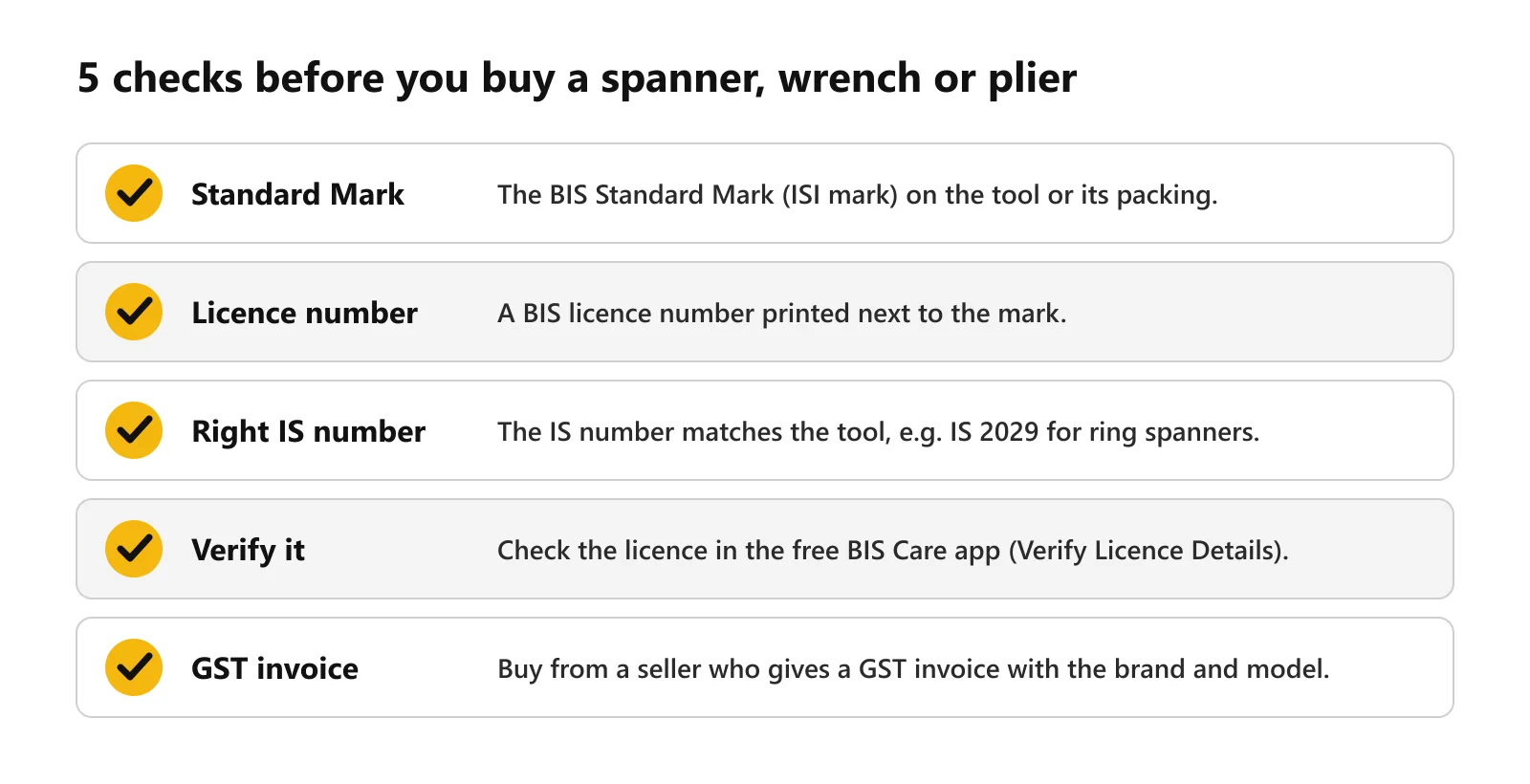
- Look for the Standard Mark. The BIS Standard Mark (ISI mark) should be on the tool or its packing.
- Find the licence number. A BIS licence number is printed with the mark.
- Match the IS number to the tool. A ring spanner should refer to IS 2029, combination pliers to IS 3650, and so on, using the table above.
- Verify the licence. The free BIS Care app (Android and iOS) has a “Verify Licence Details” option that shows whether a licence is valid and which product it covers.
- Keep a GST invoice. An invoice that names the brand and model helps if you need to raise a quality complaint or show your purchase in an audit.
For a site, plant or tender, put the requirement in writing: ask for BIS-marked tools where the order applies and for licence details on the quotation. You can do this through our bulk quote form.
What it means for workshops, factories and resellers
- Workshops and maintenance teams: tools you already own can still be used. The order is about making, importing and selling, not about tools in use.
- Purchase departments: add the IS number and “BIS Standard Mark required” to purchase orders for the nine covered tools, so suppliers quote compliant stock.
- Resellers and importers: from 1 October 2026, imported spanners, pipe wrenches and pliers of the listed types need a valid BIS licence and the Standard Mark.
Non-compliance is dealt with under the BIS Act, 2016. If you are unsure whether a specific tool is covered, check the product against the IS numbers above or ask BIS directly.
Frequently Asked Questions
When did the BIS mark become mandatory for hand tools in India?
For manufacturers and importers, 1 October 2026. Small enterprises have until 1 January 2027 and micro enterprises until 1 April 2027 for the tools they manufacture.
Which hand tools need the ISI mark?
Nine products: general purpose and heavy duty pipe wrenches, chain pipe wrenches, open-jaw spanners, ring spanners, adjustable wrenches, open-ended and ring slugging spanners, and combination side cutting pliers.
Do torque wrenches need a BIS mark?
Torque wrenches are not on the Hand Tools QCO list as of November 2026. For accurate work, ask for a calibration certificate instead.
Can I still use spanners I bought before October 2026?
Yes. The order applies to manufacturing, importing and selling. It does not stop you from using tools you already own.
How do I check if a BIS licence is genuine?
Use “Verify Licence Details” in the free BIS Care app, or the licence search on the BIS website, and check that the licence covers the same type of tool.
Sources
- Bureau of Indian Standards, upcoming QCOs notified and due for implementation (hand tools, 1 October 2026).
- Bureau of Indian Standards, BIS Care app.
- Hand Tools (Quality Control) Order, 2025, Gazette of India, 4 December 2025 (CG-DL-E-04122025-268236).
This guide summarises the order for buyers and is not legal advice. Checked on 4 November 2026.
Filed underBuying Guides
Torque Tools Wrench Team
Tool specialists, Torque Tools Wrench
Our team supplies hand tools, power tools and torque equipment to workshops and industry across India, and writes these guides from the questions customers ask us every day. About us